

To detect liver damage
Aspartate aminotransferase (AST) Test
Aspartate aminotransferase (AST) Test
Also Known As
Serum glutamic-oxaloacetic transaminase (SGOT)
This article was last reviewed
on
This article waslast modified
on 2 November 2020.
At a Glance
Why Get Tested?
When To Get Tested?
If your doctor thinks that you have symptoms of a liver disorder
Sample Required?
A blood sample taken from a vein in your arm
Test Preparation Needed?
None
Accordion Title
Common Questions
-
How is it used?
Testing for AST is usually used to detect liver damage.
AST results can be examined alongside concentrations of other liver enzymes, such as alkaline phosphatase (ALP), and alanine transaminase (ALT), to determine which form of liver disease is present.
Even though AST is found in heart and other muscles, another enzyme, creatine kinase (CK), is present in much higher amounts and is usually used to detect heart or muscle injury.
-
When is it requested?
An AST blood test is usually requested alongside several other tests to help evaluate a patient who has symptoms of a liver disorder. Some of these symptoms include jaundice (yellowing of the eyes and skin), dark urine, nausea, vomiting, abdominal swelling, unusual weight gain, and abdominal pain. AST can also be requested, either by itself or with other tests, for:
- persons who might have been exposed to hepatitis viruses,
- those who drink too much alcohol,
- persons who have a history of liver disease in their family, or
- persons taking drugs that can occasionally damage the liver.
Individuals who have mild symptoms, such as tiredness, may have AST measured to make sure they do not have long-term (chronic) liver disease. AST is often measured to monitor treatment of persons with liver disease, and may be requested either in isolation or alongside other tests.
-
What does the test result mean?
Very high concentrations of AST (more than 10 times the upper limit of normal (ULN)) are usually due to a rapidly developing liver disease called acute hepatitis, which is often caused by a virus or by toxins/drugs such as paracetamol overdose. In acute viral hepatitis, AST concentrations usually stay elevated for about 1–2 months, but can take as long as 3–6 months to return to normal.
Moderately high levels, often less than 4 times the upper limit of normal (ULN) are seen in the slowly developing variety of liver disease, chronic hepatitis, as well as alcohol abuse, cholestasis and heart, kidney or skeletal muscle damage The AST level can also be increased following the breakdown of red blood cells (haemolysis). In chronic hepatitis, AST often varies between normal and slightly increased, so doctors might request the test regularly to determine the pattern of change.
In some diseases of the liver, especially when the bile ducts are partially blocked, fatty change in the liver or with cirrhosis and certain cancers of the liver, AST concentrations may be slightly high or close to normal.
In chronic viral hepatitis, chronic alcoholism or non-alcoholic fatty liver disease a high AST/ALT ratio may be used to predict long-term complications such as cirrhosis.
-
Is there anything else I should know?
An injection of medicine into muscle tissue, or even strenuous exercise, may increase AST concentrations within the bloodstream. In rare instances, some drugs can damage the liver or muscle, increasing AST concentrations. This is true of both prescription drugs and some 'natural' or herbal health products. If your doctor finds that you have high levels of AST, tell him or her about all the drugs and health products you are taking.
-
What other tests are used to evaluate liver disorders?
Other commonly used liver tests include more enzymes found in liver cells, such as alanine transferase (ALT) and alkaline phosphatase (ALP), as well as bilirubin (a yellow pigment removed from the body by the liver).
-
Who is at risk for a liver disorder?
While many things could harm the liver, the major causes of liver disease are infection by viruses that target the liver and by drinking too much alcohol. In rare cases, some medicines can damage the liver; your doctor may suggest testing your liver from time to time if you are taking one of these. Some diseases that are inherited from your parents can occasionally damage the liver.
-
What signs should make me aware of a liver disorder?
In many cases, liver disease is 'silent'. When the liver is damaged rapidly (a disease called acute hepatitis), the skin and the whites of the eyes often turn yellow, the urine becomes brown, and bowel movements lose their colour. In its late stages, liver disease may produce swelling of the abdomen, vomiting of blood, confusion, and easy bruising.
Related Content
On This Site
Tests: ALT; ALP; GGT; bilirubin; liver function tests
Conditions: Liver disease, Hepatitis, Alcoholism
Elsewhere On The Web
ACB, Analyte Monographs (AMALC): AST 
British Liver Trust
NHS
GP Notebook
Related images
View More
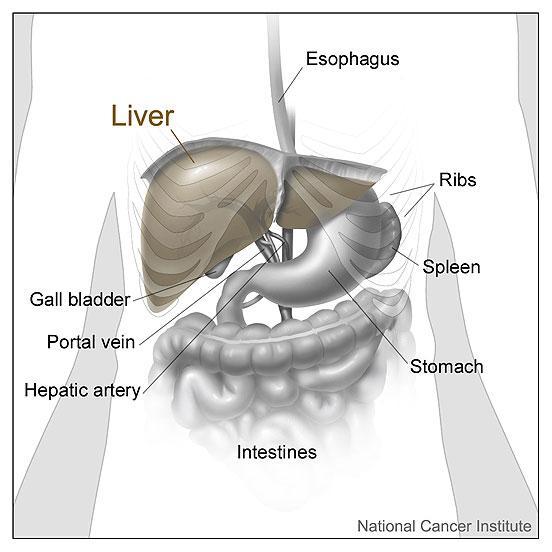
Location of the liver. Don Bliss, National Cancer Institute