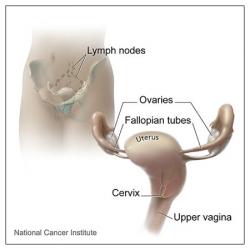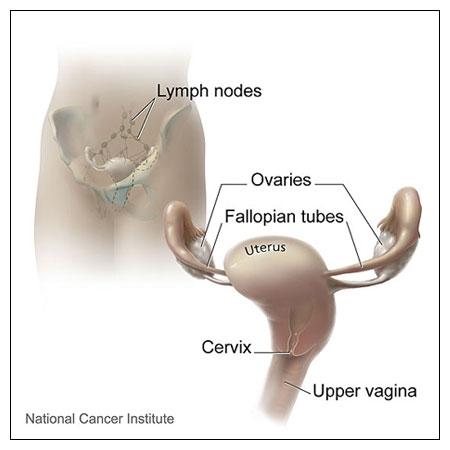
Cancer of the uterine cervix (cervical cancer) is caused by an uncontrolled growth of cells in the cervix. The cervix is the narrowed lower portion of a woman’s uterus (womb). It is shaped like a cone and connects the uterus to the vagina. The uterine cervix is often referred to as the neck of the womb.
Since the introduction of the cervical screening programme in the UK, rates of cervical cancer have decreased. Cervical cancer is now the fifteenth most common type of cancer in women in the UK and accounts for less than 1% of all new cancer cases in women. Death from cervical cancer is very rare in the UK with an incidence of 2.2 deaths per 100,000 in the population. However, in developing nations without screening programmes cervical cancer is still a very serious health problem and cervical cancer continues to be the second most common type of cancer in women worldwide (after breast cancer).
Vaccination against HPV was introduced in the UK in 2008, but it will be many years before this reduces cervical cancer incidence further. Vaccination does not prevent all types of cervical cancer so vaccinated women are still advised to undergo regular screening.
Almost all (80-90%) of cervical cancers are squamous cell carcinomas. These occur in the flattened cells that cover the cervix, known as squamous cells. Most other cases are adenocarcinomas, rising from glandular cells of the upper cervix. A few cervical cancers are mixtures of both types.
Cervical cancer often has a pre-cancerous stage with abnormal changes in the cells of the cervix. These changes are termed “dyskaryosis” if detected on a liquid based cytology test (LBC) or cervical intraepithelial neoplasia (CIN) if detected on a biopsy. If left untreated, dyskaryosis or CIN may progress to cervical cancer. With early detection, cervical cancer is usually easily treatable.
Early detection and treatment can prevent cervical cancer, but the LBC screening test is not perfect and will not detect pre-cancerous states or cancer in all cases. If left untreated cervical cancer is almost always fatal. Given time, cervical cancer can spread to the rest of the uterus, bladder, rectum, and abdominal wall. It may involve the pelvic lymph nodes and may then spread (metastasise) to other organs throughout the body.