Inflammatory Bowel Diseases
What are they?
Inflammatory bowel diseases (IBD) are chronic disorders that affect more than 70,000 people in the UK. Characterized by swollen and damaged tissues in the lining of the intestinal tract, these conditions vary in severity from patient to patient and change over time. During a flare-up, a patient may experience frequent bouts of watery and sometimes bloody diarrhoea, abdominal pain, weight loss and fever. Between these flare-ups symptoms frequently diminish. Many patients may go through extended periods of remission before another flare-up occurs.
The cause of IBD is not known, but these diseases are thought to be due to an autoimmune process that has been triggered in those with a genetic predisposition by a viral illness or an environmental factor. IBD affects both sexes equally and is seen most frequently in Caucasians who live in industrialised countries. The most common inflammatory bowel diseases are Crohn’s disease and ulcerative colitis. In the UK, ulcerative colitis is twice as common as Crohn’s disease. Both diseases can start at any age, but the majority are first diagnosed in patients between the ages of 15 and 35 and a smaller number between 50 and 70. Children affected by either disease may experience delayed development and growth retardation in addition to gastrointestinal symptoms. Patients who are diagnosed with one of these conditions at a young age are also at an increased risk of developing colon cancer later in life.
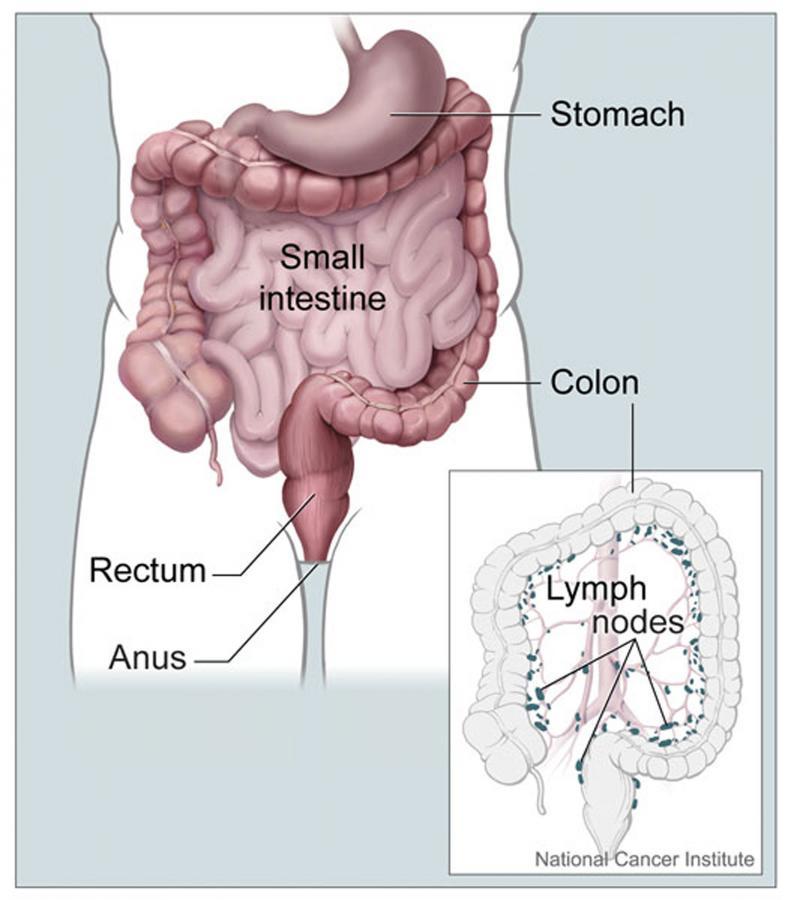
Crohn’s disease can affect any part of the gastrointestinal tract from the mouth to the anus, but is most commonly found in the last part of the small intestine (the ileum) and the first part of the colon (large intestine or bowel). Bowel tissue may be affected in patches with normal tissue in between. Inflammation may penetrate deep into the tissues of the intestine and form ulcers or fistulae (tunnels through the intestinal wall into another part of the gut or another organ). Other complications of Crohn’s disease include bowel obstruction, anaemia from bleeding tissue and infections. About 80% of patients with Crohn’s disease require surgery at some stage, either to remove damaged sections of the intestine or to treat an obstruction or fistula.
Ulcerative colitis primarily affects the surface lining of the colon. Although the symptoms may be similar to those seen with Crohn’s disease, the tissue inflammation is continuous, not patchy, and usually starts from the anus and extends up the colon. Ulcerative colitis tends to present more frequently with bloody diarrhoea. Its most serious complication is toxic megacolon, a relatively rare acute condition in which a section of the colon becomes paralyzed. Faeces does not move through the section and it accumulates and dilates the colon. This can cause abdominal pain, fever, and weakness and can become life threatening if left untreated.
About 5% of patients with IBD affecting the colon cannot be classified because they have some clinical, radiological, endoscopic and pathological features of both Crohn’s disease and ulcerative colitis.